
(973) 828-0041Free estimates
Schedule Service
Full creosote and soot removal to keep your chimney safe, clean, and drafting the way it should.
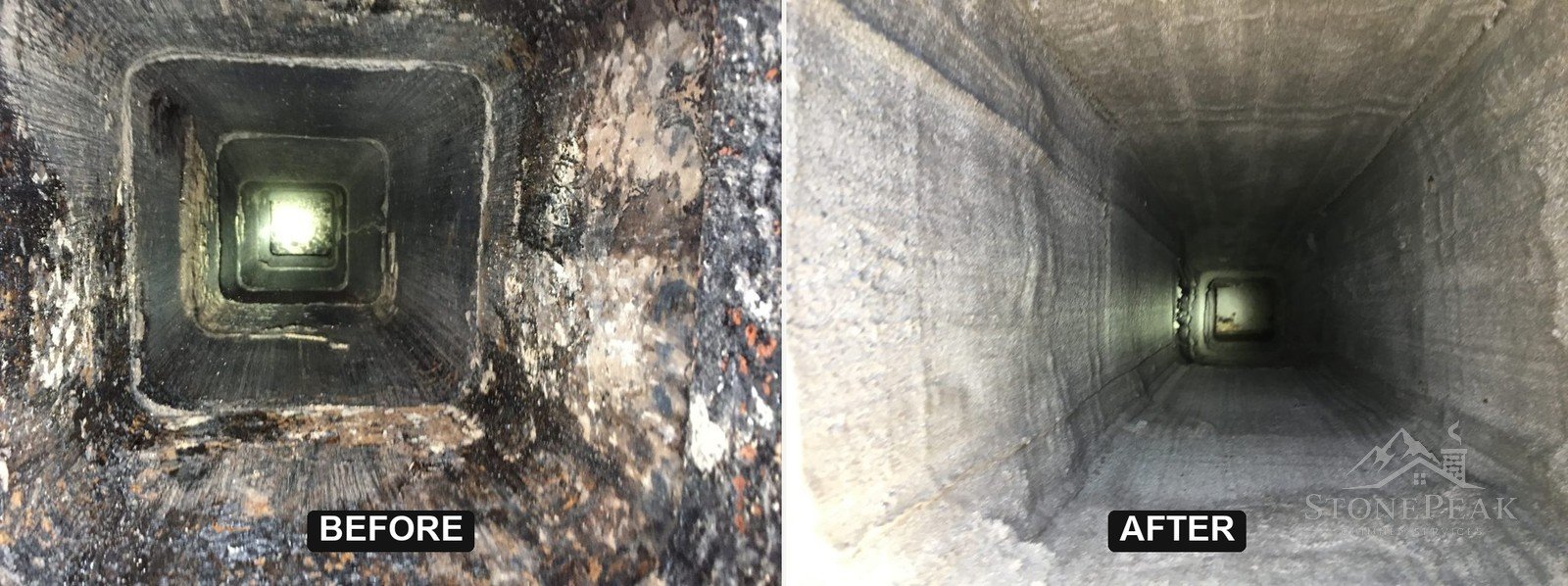
Creosote is the sticky, tar-like byproduct of burning wood, and it builds up inside a flue every time a fire is lit. Left alone, it narrows the flue, restricts airflow, and past a certain point becomes a fire hazard of its own. A proper sweep removes it before it gets there.
Our technicians clear soot and creosote from the flue, smoke chamber, and firebox using rotary brushes and a HEPA-filtered vacuum, so the mess stays contained instead of settling over your hearth and furniture. We lay drop cloths before starting and check draft and damper function once the flue is clear.
Drop cloths go down over the hearth and nearby furniture before any tool touches the flue.
Rotary or rotary-whip brushes sized to your flue clear creosote and soot from top to bottom.
A HEPA-filtered vacuum captures loosened debris so it doesn’t settle across the room.
Damper function and draft get a quick check, and you get a rundown of anything worth noting.
Sweep pricing mainly comes down to how much creosote has built up, how the fireplace is accessed, and whether the flue has more than one offset or bend. A straightforward annual sweep on an easily accessible flue is priced differently than a first-time sweep on a chimney that hasn’t been cleaned in years.
A clean-burning fire means no creosote.
FactEven efficient fires produce some creosote — the type of wood, moisture content, and airflow all affect how much, but the buildup never fully stops.
Sweeping is only necessary if you smell smoke.
FactOdor is a late-stage warning sign. Buildup narrows the flue and raises fire risk well before it’s noticeable from the room.
Most sweeps take 45 minutes to an hour and a half, depending on how much buildup there is and how the fireplace is used.
Once a year is standard for a wood-burning fireplace or stove used through the winter. Occasional-use fireplaces can sometimes go longer, but we’ll tell you honestly if yours can wait.
Yes — drop cloths go down before we start, and we use HEPA-filtered equipment specifically so soot doesn’t end up on your floors or furniture.